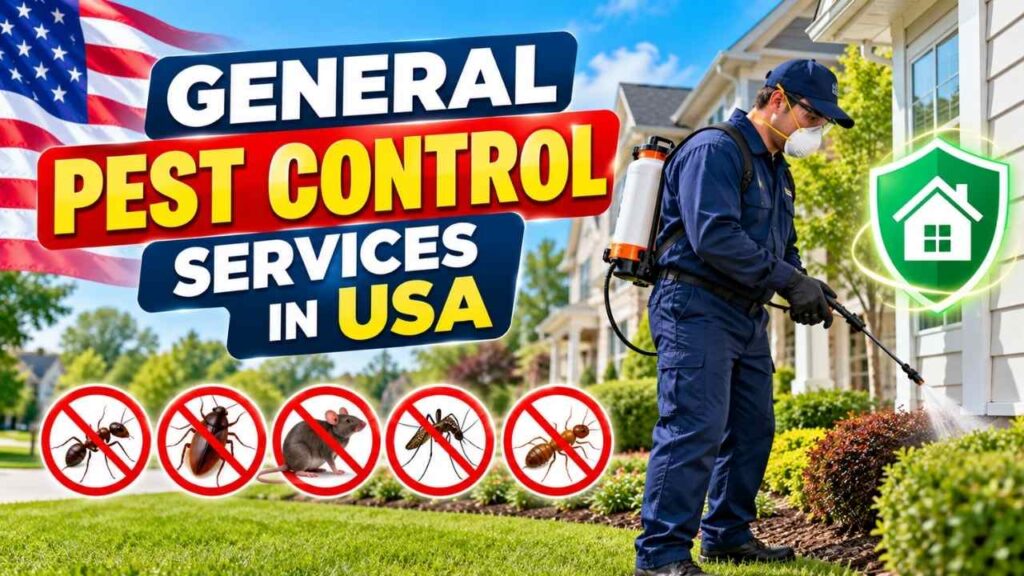
General pest control services in USA help homeowners and businesses identify pest activity, treat active infestations and reduce the chance of repeat problems. Typically, these services cover ants, cockroaches, spiders, rodents and other household pests. However, the right plan depends on the pest, property size, treatment frequency, infestation severity and whether prevention or urgent eradication is the main goal.
National providers offer several service models. For example, some focus on recurring residential protection, while others specialize in commercial facilities, Integrated Pest Management or targeted treatments. Cost also varies widely. Ongoing plans often range from $300 to $900 per year, while specialized bed bug or termite work may begin at $1,000 or more.
Quick service snapshot
- Routine plans often address common insects and rodents through scheduled visits.
- Monthly programs generally average about $40 to $70 per visit.
- Termite, bed bug and wildlife services are usually separate add-ons.
- Integrated Pest Management combines monitoring, prevention and targeted treatment.
What Do General Pest Control Services in USA Include?
Generally, general pest control services in USA include a property inspection, targeted treatment and ongoing prevention. Before recommending a treatment schedule, technicians may check entry points, moisture-prone areas, wall gaps, kitchens, garages, attics and exterior foundations.
During a typical visit, technicians may provide interior spot treatment, exterior barrier application, bait placement and advice about sanitation or repairs. For example, a technician may identify a gap beneath a garage door as the reason mice continue entering instead of simply placing more traps.
Common pests covered
Routine programs commonly target ants, cockroaches, spiders, silverfish, earwigs, crickets, centipedes and rodents such as mice and rats. However, coverage varies by provider and contract. Therefore, the service agreement should identify included pests rather than relying on a broad phrase such as “total protection.”
That distinction matters for new customers. For instance, a quarterly plan may include general insects but exclude termites, bed bugs, mosquitoes or wildlife. Those issues often require separate inspection methods, products, equipment and follow-up visits.
Which National Providers Offer These Services?
Several major companies operate across the United States, but their strengths are not identical. As a result, comparing inspection methods, guarantees, pest coverage and treatment style can help a homeowner or facility manager choose a suitable service instead of selecting only by brand recognition.
| Provider | Primary strength | Notable service detail |
|---|---|---|
| Orkin | Residential and commercial pest control | 400+ locations, more than 125 years of experience, a 5-step inspection and treatment process and a 30-day money-back guarantee |
| Terminix | Recurring residential protection | PestFree365 plans covering dozens of common household pests with the Terminix It Guarantee for free re-treatments |
| Rentokil US | Commercial pest management | Strong focus on Integrated Pest Management and smart monitoring tools such as PestConnect |
| Fox Pest Control | Home protection and outdoor services | Quarterly plans, yard services, termite defense and certified entomologists |
| Greenix Pest Control | Seasonal and recurring protection | General pest control, rodent management and a 6-step exterior and interior protection process |
How Orkin approaches treatment
Orkin operates more than 400 locations and brings over 125 years of industry experience. Its stated 5-step inspection and treatment process is designed to identify pest activity, apply control measures and support ongoing prevention. In addition, the company offers a 30-day money-back guarantee.
The practical advantage of a structured process is consistency. Therefore, a homeowner can ask what happens during each step, which areas are treated and how follow-up works. That approach is more useful than accepting a vague promise that the property will simply be “protected.”
What Terminix plans cover
Terminix offers plans such as PestFree365, which cover dozens of common household pests. Under applicable service terms, its Terminix It Guarantee provides free re-treatments when covered pest activity returns.
Recurring coverage may suit a home where ants appear every spring or spiders become noticeable around exterior lighting. Still, customers should confirm the exact pest list, visit schedule and exclusions before enrollment.
Why Rentokil US is notable
Rentokil US places strong emphasis on commercial pest control and Integrated Pest Management. Its PestConnect smart monitoring tools can support earlier detection by helping teams track pest activity in business environments.
This approach can be especially useful in restaurants, warehouses, offices and other facilities where a small pest issue can affect operations or compliance. However, monitoring does not replace inspection or sanitation. Instead, it can provide an additional layer of evidence between scheduled visits.
Fox and Greenix service models
Fox Pest Control offers quarterly home protection plans, yard services and termite defense. Its use of certified entomologists is relevant for customers who want pest identification supported by insect specialists rather than a generic treatment routine.
Meanwhile, Greenix Pest Control provides general pest control, rodent management and seasonal treatments. Its 6-step exterior and interior protection process combines work around the property with treatment inside the home. Consequently, the exterior focus can help reduce the pressure that drives pests indoors.
Which Add-On Treatments May Be Needed?
General pest control services in USA do not automatically cover every pest problem. For that reason, termite defenses, bed bug eradication, mosquito and tick yard treatments and wildlife removal are commonly offered as specialized add-ons with separate pricing and treatment requirements.
- Termite defense: May involve inspection, bait systems, barrier treatments or other measures based on construction and termite activity.
- Bed bug treatment: Usually requires careful inspection of sleeping areas, furniture and nearby cracks because visible insects may not show the full extent of the problem.
- Mosquito and tick services: Often focus on outdoor areas where vegetation, shade and standing water can support pest activity.
- Wildlife removal: Addresses animals entering attics, crawl spaces or other structures and may require exclusion work after removal.
Consider a home with ants in the kitchen and rodents in the garage. A general plan may address the ants and routine rodent activity, while structural exclusion or wildlife work could be billed separately. Therefore, asking for a written scope helps prevent surprise charges.
How Does Integrated Pest Management Work?
Integrated Pest Management, or IPM, combines inspection, monitoring, sanitation, exclusion and targeted treatment instead of relying on broad chemical application alone. The goal is to reduce conditions that attract pests while using control products only where they are appropriate.
For instance, an IPM plan for a small business might include monitoring stations, food-storage checks, door-seal repairs and focused treatment near an identified entry point. This method can reduce unnecessary applications. However, results depend on cooperation from property owners and facility staff.
According to the U.S. Environmental Protection Agency’s Integrated Pest Management guidance, IPM uses knowledge of pest life cycles and environmental conditions to manage pests through a combination of methods. Importantly, the approach is not a promise of zero chemicals. Instead, it is a decision-based system that prioritizes prevention and targeted action.
Why IPM can be useful
- It connects treatment decisions to evidence from inspections and monitoring.
- Additionally, it can address food, moisture and access problems that support recurring infestations.
- It may reduce unnecessary treatment in areas without confirmed activity.
- Furthermore, it works across homes, offices, warehouses and other commercial settings.
The limitation is simple: IPM requires more than a single spray visit. If a property owner leaves food exposed or ignores a damaged screen, pest pressure may continue even when treatment was applied correctly.
How Much Do Pest Control Services Cost?
Ongoing or quarterly pest control plans typically range from $300 to $900 per year. In general, monthly programs average about $40 to $70 per visit. Specialized treatments such as bed bug eradication or heavy termite work can start much higher, often at $1,000 or more.
| Service type | Typical cost information | Main cost drivers |
|---|---|---|
| Ongoing or quarterly plan | $300 to $900 per year | Property size, pest coverage, location and visit frequency |
| Monthly program | About $40 to $70 per visit | Service scope, contract terms and treatment areas |
| Bed bug or heavy termite treatment | Often starts at $1,000+ | Infestation severity, home size and treatment complexity |
These figures are broad planning ranges rather than fixed quotes. For example, a 1,500-square-foot home with light seasonal ant activity may cost less than a larger property with rodents, difficult access points or repeated treatment needs.
Location also affects pricing. Labor costs, climate, pest species and local regulations can change the final estimate. Before signing, request the initial fee, recurring charge, covered pests, cancellation terms, retreatment policy and add-on prices in writing.
What Should You Check Before Hiring?
The most important comparison is not the lowest advertised price. Instead, it is whether the provider can explain the pest, treatment scope and prevention plan in plain language. A clear proposal should connect the recommended service to findings from the inspection.
- First, ask which pests are included and which require separate treatment.
- Next, confirm how often technicians will visit and whether follow-up is included.
- Then, review the guarantee, retreatment conditions and cancellation terms.
- Also, check whether interior treatment requires preparation or temporary access restrictions.
- Request a written estimate that separates routine services from specialized add-ons.
- Finally, verify licensing or certification requirements that apply in your state.
A new homeowner may be tempted by a low introductory price. However, a cheaper offer can become more expensive if it excludes rodents, requires a long contract or charges separately for every return visit. Therefore, the full service scope is the better comparison point.
Common Mistakes That Increase Pest Problems
Many recurring infestations are linked to small property conditions rather than a lack of treatment. For example, leaving pet food out overnight, storing cardboard in damp areas or allowing shrubs to touch exterior walls can create shelter and access routes.
- Choosing by price alone: The cheapest plan may cover fewer pests or visits.
- Ignoring entry points: Treatment cannot permanently solve a problem when gaps, damaged screens or door sweeps remain open.
- Skipping preparation instructions: Clutter and inaccessible areas can limit inspection quality.
- Expecting one visit to solve every issue: Bed bugs, termites and established rodent activity may require specialized follow-up.
- Failing to read the guarantee: A guarantee may apply only to listed pests and service conditions.
One practical improvement is to keep a simple record of sightings. Note the date, room, pest description and approximate number observed. As a result, that information can help a technician distinguish a single indoor visitor from an established pattern.
Questions People Ask About Pest Control
What do general pest control services usually cover?
Most routine plans cover common pests such as ants, cockroaches, spiders, silverfish, earwigs, crickets, centipedes, mice and rats. However, exact coverage depends on the provider and contract.
Are termites included in a general pest plan?
Usually, termite defense is a specialized add-on. Termites often require a dedicated inspection and treatment plan because their behavior and control methods differ from routine household insects.
How often should a home receive pest treatment?
Many residential plans use quarterly visits, while some customers choose monthly programs. The suitable schedule depends on pest pressure, seasonality, property conditions and the service agreement.
Is Integrated Pest Management safer than routine treatment?
IPM emphasizes prevention, monitoring and targeted action. Therefore, it can reduce unnecessary treatment, but the provider should still explain every product, placement and safety instruction used on the property.
How much should a homeowner budget for pest control?
Routine plans often cost $300 to $900 per year. Meanwhile, monthly visits average about $40 to $70, while serious termite or bed bug work may begin above $1,000.
What should a commercial property manager prioritize?
Commercial managers should look for documented inspections, monitoring, response procedures and IPM experience. In some facilities, tools such as PestConnect may be useful when early detection and reporting are important.
Important hiring warning: Be cautious when a company asks for payment before clearly identifying the business, service scope or treatment terms. Do not rely on an unsolicited offer or pressure to decide immediately. Instead, verify the provider through its official website, check applicable state licensing information and request a written agreement before authorizing work.
Choosing a Practical Service Plan
The best general pest control services in USA are the ones that match the property’s actual risk. For example, a quarterly plan may be reasonable for seasonal ants and spiders, while a business with food-handling areas may need documented monitoring and a stronger IPM program.
Start with an inspection and ask for a written explanation of the findings. Then compare included pests, visit frequency, guarantees, retreatment terms and specialized service costs. Before treatment begins, follow preparation instructions and address moisture, food storage and entry points that can keep the problem active.
