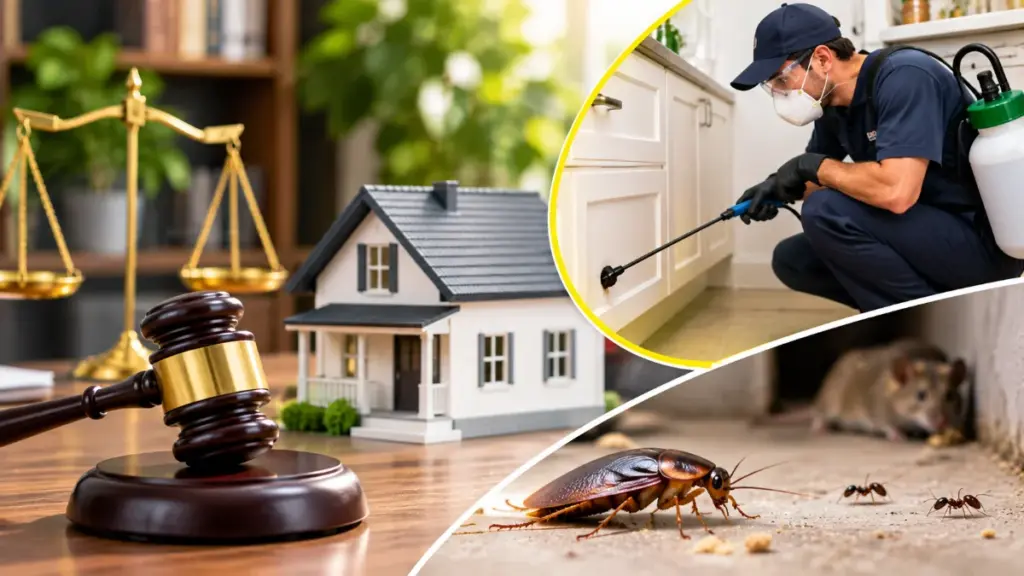
Can you sue landlord for pest control? In New York City, you may have a legal claim when a landlord ignores a serious infestation or fails to make reasonable repairs. The main options are an HP action in Housing Court, a small claims lawsuit for financial losses, or a rent abatement defense when the landlord seeks unpaid rent.
The strength of a case usually depends on notice, documentation and the landlord’s response. A landlord who promptly arranges a real inspection and treatment may have a stronger defense than one who ignores repeated complaints or provides an inadequate fix. The rules can also depend on the lease, the building and the specific facts.
- An HP action can ask a judge to order extermination and repairs.
- Small claims court can address qualifying financial losses.
- Rent abatement may reflect the period when the home was less habitable.
- Written notice and NYC311 records can make the problem easier to prove.
Important: This is general legal information, not legal advice. Housing disputes can affect your tenancy and finances. Consider speaking with a New York housing attorney or a qualified tenant-support organization before filing.
Can You Sue Landlord for Pest Control in NYC?
Yes, you can sue landlord for pest control when a serious infestation affects the home and the landlord fails to take reasonable action after receiving notice. Roaches, mice, rats and bed bugs may support a housing complaint when the problem is substantial, recurring or connected to conditions the landlord must address.
A court will not necessarily hold a landlord responsible for every pest sighting. The key question is often whether the landlord knew or should have known about the condition and then failed to respond appropriately. A prompt inspection followed by meaningful treatment can weaken a tenant’s claim even when pests appear again.
For a practical starting point, report the condition in writing and file a complaint through NYC311. You can also review the city’s housing information through the NYC Department of Housing Preservation and Development. These official channels can help create a record of the complaint and any inspection activity.
The most useful evidence usually connects three events: the infestation, the landlord’s notice and the landlord’s response. For example, dated photographs of roaches near an unsealed pipe become more useful when paired with an email showing that the landlord received the complaint and did not arrange a proper repair.
Which Legal Option Fits Your Problem?
The right legal route depends on what you want the court to do. Housing Court can focus on repairs and habitability. Small claims court can focus on qualifying financial losses. Rent abatement can address the value of housing lost because serious conditions reduced the home’s usable living space.
| Option | Main purpose | Useful when | Evidence to gather |
|---|---|---|---|
| HP action | Obtain an order for repairs and pest treatment | The landlord has not corrected the infestation or entry points | Written notices, NYC311 records, photos and inspection information |
| Small claims lawsuit | Seek money for qualifying losses | You paid costs or lost property after the landlord ignored the problem | Receipts, replacement estimates, treatment records and communication logs |
| Rent abatement | Seek a rent reduction tied to reduced habitability | The infestation substantially interfered with use of the home | Proof of severity, duration, affected rooms and landlord notice |
These options are not interchangeable. An HP action is designed to push repairs rather than provide a simple refund. Small claims court is better suited to documented monetary losses. A rent abatement argument may arise in Housing Court or as a defense or counterclaim when a landlord sues for nonpayment.
When is an HP action useful?
An HP action can help when the immediate goal is a court order requiring the landlord to send a licensed exterminator and repair conditions that let pests enter. Those conditions may include unsealed pipes, wall openings or other structural gaps. Before filing, notify the landlord and report the issue through NYC311 so HPD may document violations.
The repair request should be specific. Instead of writing only “there are bugs,” identify the type of pest if known, the rooms affected, the dates observed and the physical openings that may be contributing to the problem. Keep a copy of the message and note whether the landlord schedules an inspection or treatment.
When does small claims court make sense?
Small claims court may be relevant when the infestation caused a provable financial loss. Potential examples include a partial rent refund, ruined furniture or food and reasonable out-of-pocket treatment costs. The court will generally need evidence that connects the loss to the infestation and shows why the landlord should be responsible.
Keep receipts and photographs together. A receipt for replacement furniture alone may not explain the condition of the original item. Add dated photographs, a written description and messages showing when the landlord learned about the infestation. Avoid claiming losses that you cannot document or explain clearly.
How does rent abatement work?
Rent abatement seeks a reduction that reflects the loss of habitability during the affected period. The amount and availability depend on the facts, the court and applicable New York law. A tenant may raise the issue in Housing Court or use it as a defense or counterclaim if the landlord brings a nonpayment case.
Do not simply stop paying rent without understanding the legal risk. Nonpayment can lead to a court case and may create additional pressure on the tenant. Preserve the rent records, report the conditions and obtain legal guidance before making a decision that changes payment obligations.
What Should You Do Before Filing?
Before asking a court for relief, build a clean record of the infestation and the landlord’s response. Courts often need more than a general statement that pests were present. A dated timeline can show when the problem began, how often it appeared, which rooms were affected and what happened after each complaint.
- Send written notice. Describe the pests, affected areas and suspected entry points. Use a method that lets you keep proof of delivery or receipt.
- Report the issue to NYC311. Provide accurate details so the complaint can be routed for possible HPD inspection.
- Photograph and record conditions. Capture pests, droppings when relevant and structural gaps such as unsealed pipes or wall holes. Keep the original files with their dates.
- Save every communication. Store texts, emails, work orders and appointment details in one folder.
- Keep financial records. Save receipts for damaged food, furniture, treatment costs or other claimed losses.
- Record the landlord’s efforts. Note inspection dates, treatment visits, repairs and whether the problem returned.
A simple timeline can be more persuasive than a large collection of disconnected images. For example, list the first report, the date of each treatment, the rooms that remained affected and the date of any follow-up complaint. This format helps separate a short-lived problem from a continuing failure to address the cause.
Do not alter photographs or rely only on close-up images. Include wider views that show where the pest or gap appeared. Keep copies of messages in their original form when possible. If another household member or neighbor directly observed the condition, note what they personally saw without adding assumptions.
What counts as a reasonable landlord response?
A reasonable response may include arranging a genuine inspection, using a licensed exterminator when appropriate, treating the affected areas and repairing access points. One visit may not solve a recurring infestation if food sources, moisture or structural openings remain. The quality of the response matters as much as the fact that someone visited.
Courts rarely treat a landlord as automatically liable when the landlord promptly schedules real inspections and pest treatments. That does not end the tenant’s concerns, especially if the treatment is incomplete or the landlord refuses to correct entry points. Keep documenting the condition after each visit.
How Do You Show the Home Was Less Habitable?
To support a habitability-related claim, show how the infestation affected ordinary use of the home. The strongest record usually identifies the pest, the location, the frequency, the duration and the practical impact. A recurring infestation in a kitchen or bedroom may require a different explanation from an isolated sighting in a common area.
Connect the condition to specific effects without exaggeration. You might document food that had to be discarded, furniture that became unusable or rooms that could not reasonably be used. If treatment required you to leave temporarily, preserve any related receipts and communications. Claims should reflect actual losses rather than guesses.
Structural evidence can also matter. Photograph gaps around pipes, holes in walls, damaged screens or other openings. A pest problem may continue when treatment addresses visible insects but leaves the route of entry untouched. That distinction can help explain why repeated complaints were necessary.
Health concerns require care. Pest exposure can be stressful and may create concerns about bites, allergies or contamination. Do not use a housing claim to self-diagnose a medical condition. Seek medical attention for serious symptoms and contact Poison Control at 1-800-222-1222 for urgent poisoning questions.
Medical records may be sensitive and should be handled carefully. If health effects are part of a dispute, ask a qualified attorney how those records relate to the claim. A housing court or small claims case may focus on different evidence than a personal injury case.
When Should You Get Legal Help?
Consider legal help when the infestation is severe, the landlord threatens eviction, the landlord files a nonpayment case or the claimed losses are substantial. Professional guidance can also help when the landlord disputes receiving notice or argues that the tenant caused the condition.
A licensed exterminator may be necessary for large or persistent infestations, bed bugs, rats, termites or a high nest that creates a safety concern. Tenants should not attempt dangerous work at height or handle treatment products outside their labels. For pest products, use only an EPA-registered product according to its label. The label is the law.
- Keep children and pets away from treated areas as directed.
- Follow ventilation and protective-equipment instructions on the label.
- Never mix products or use them in a way the label does not permit.
- Use extra caution with rodenticides because secondary poisoning can harm pets or wildlife.
- Ask the professional what preparation and re-entry instructions apply.
Wildlife and bee issues may involve state or local rules that differ from ordinary household pest control. Contact the relevant state agency or Extension service when the problem involves bats, wildlife or bees. A landlord-tenant dispute does not remove those safety and legal requirements.
How should you compare professional help?
Ask for written information before agreeing to treatment. Verify the provider’s state license when required, ask whether the work includes inspection and exclusion repairs, and review the written contract. Check what happens if pests return and whether the stated guarantee has conditions. Do not rely on a verbal promise that the home will remain pest-free.
Obtain more than one written quotation when practical. Costs can vary with the pest, home size, treatment method, building condition, location and treatment frequency. Because no verified price was provided for this situation, avoid treating an online estimate as a reliable local cost.
Common Mistakes That Weaken a Claim
The most common mistake is waiting to create a written record. A phone call may alert the landlord, but a dated written notice gives you a clearer timeline. Another mistake is discarding damaged items before photographing them or keeping receipts. Evidence becomes harder to reconstruct after the fact.
- Do not stop paying rent without understanding the consequences.
- Do not exaggerate the number of pests or the value of damaged property.
- Do not assume one treatment proves the landlord ignored the problem.
- Do not use unapproved chemicals or apply a product off-label.
- Do not erase texts, emails or work-order messages.
- Do not confuse a request for repairs with a completed repair.
A focused complaint is usually stronger than an emotional one. State what happened, when it happened, where it happened and what action you want. For example, ask for an inspection, licensed treatment and repair of a named opening. Then record whether the landlord completes each step.
Another important distinction is between a landlord’s inadequate response and a landlord’s reasonable effort that did not immediately solve the problem. Persistent pests can have several causes. Your evidence should explain why the response was incomplete rather than merely showing that pests appeared again.
What Happens After You Report the Problem?
After receiving notice, the landlord may inspect the home, arrange treatment and address entry points. Continue documenting conditions during that process. If the landlord responds promptly, give accurate access information and keep appointment records. If the landlord cancels, sends an unqualified person or refuses needed repairs, record those details.
If NYC311 or HPD becomes involved, keep complaint numbers and inspection information with your other records. An agency record does not automatically decide a private money claim, but it may help establish that the condition was reported and that a housing agency had an opportunity to inspect.
When a landlord sues for nonpayment, do not ignore court papers. Bring your lease, rent records, notices, photographs, communications and inspection documents to any scheduled appearance. A tenant facing a court deadline should seek legal assistance quickly because missing a response date can limit available options.
The practical decision is often sequential: report the condition, preserve proof, assess the landlord’s response and then choose between a repair-focused action, a money claim or a rent-related defense. That approach avoids spending time on a legal remedy that does not match the result you need.
Frequently Asked Questions
Can I sue my landlord for bed bugs?
You may have a claim if the landlord knew about the bed bugs and failed to arrange reasonable treatment or address related conditions. Keep dated evidence and document every notice and response.
Can I sue for ruined food or furniture?
Possibly. Small claims court may address qualifying losses when you can connect the damage to the infestation and support the value with photographs, receipts or replacement records.V
Do I need to report pests to NYC311?
Reporting through NYC311 can create an official record and may allow HPD to document violations. It does not replace written notice to the landlord.
Can I stop paying rent because of pests?
Do not stop paying rent casually. Rent nonpayment can trigger a court case, so obtain legal guidance and understand any rent abatement defense before changing your payment practice.
What if my landlord sends an exterminator quickly?
A prompt inspection and genuine treatment may help the landlord defend against liability. Keep monitoring the problem because repeated pests may show that entry points or other causes remain unresolved.
How much can I recover?
No fixed amount applies to every case. Any recovery or rent reduction depends on the facts, proof, applicable law and the court handling the dispute.
Choose the Remedy That Matches the Harm
If the main problem is an ongoing infestation, an HP action may better match the goal of forcing treatment and repairs. If you can document financial losses, small claims may be more relevant. If the home’s use was reduced and rent is disputed, rent abatement may become part of a Housing Court case.
Start with written notice, NYC311 reporting and organized evidence. Then review the landlord’s actual response rather than assuming that every pest problem leads to damages. Before filing, verify current procedures through official New York City resources and consider advice from a qualified housing professional.
Information verification note: Court procedures, agency processes and housing requirements can change.

2 comments