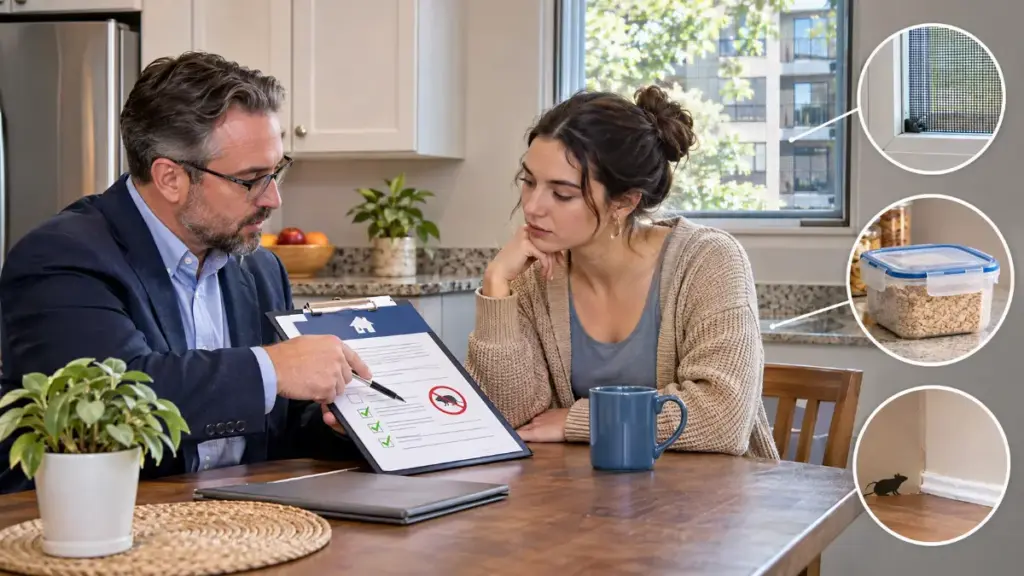
Do landlords pay for pest control? Usually, yes. Landlords generally handle infestations that affect habitability, existed before move-in, or result from structural problems such as foundation gaps, broken screens, plumbing leaks, or shared walls. The answer can change based on state and local housing laws, the lease, and whether tenant actions caused the pest problem.
- Landlords commonly pay for rodents, cockroaches, bed bugs, and similar infestations tied to the property.
- Tenants may pay when poor sanitation, delayed reporting, or infested belongings caused the issue.
- Lease terms matter, but they cannot always override core habitability protections.
Do landlords pay for pest control?
Landlords typically pay for pest control when pests threaten safe, livable housing or enter because of building conditions. A landlord’s responsibility often includes arranging inspection and treatment for rodents, cockroaches, bed bugs, and other common pests. However, the tenant may share responsibility when the infestation resulted from poor sanitation, improper food storage, delayed notice, or bringing infested items into the home.
The most useful way to assess responsibility is to separate the cause from the location. A mouse entering through a foundation gap presents a different issue from food waste left uncovered inside an apartment. Likewise, bed bugs may require careful investigation because they can arrive through luggage, furniture, neighboring units, or shared walls.
State and local rules control many habitability disputes. A lease can assign routine pest duties, but a landlord generally cannot use contract language to waive protections that housing law makes mandatory. Tenants should therefore read the lease while also checking the applicable housing authority’s rules.
When does the landlord usually pay?
Landlords usually pay when the infestation is connected to habitability, structural defects, or a pre-existing condition. Safe housing standards generally require owners to address conditions that make a rental unhealthy or unlivable. The exact legal test differs by jurisdiction, so tenants should avoid relying on a lease clause alone.
Common landlord-responsibility situations include:
- Rodents entering through gaps in the foundation, walls, doors, or utility openings.
- Cockroaches spreading through plumbing chases, shared walls, or common areas.
- Bed bugs discovered soon after move-in, especially when neighboring units also have signs.
- Pests connected to leaking pipes, moisture, broken screens, or damaged building materials.
- Infestations that affect multiple apartments in the same building.
Timing can provide useful evidence. A tenant who reports pests shortly after moving in may have a stronger argument that the condition was pre-existing. That timing does not automatically decide the dispute, but it can help establish a clear record when combined with photographs, messages, inspection notes, and maintenance requests.
What building problems make pest control the landlord’s duty?
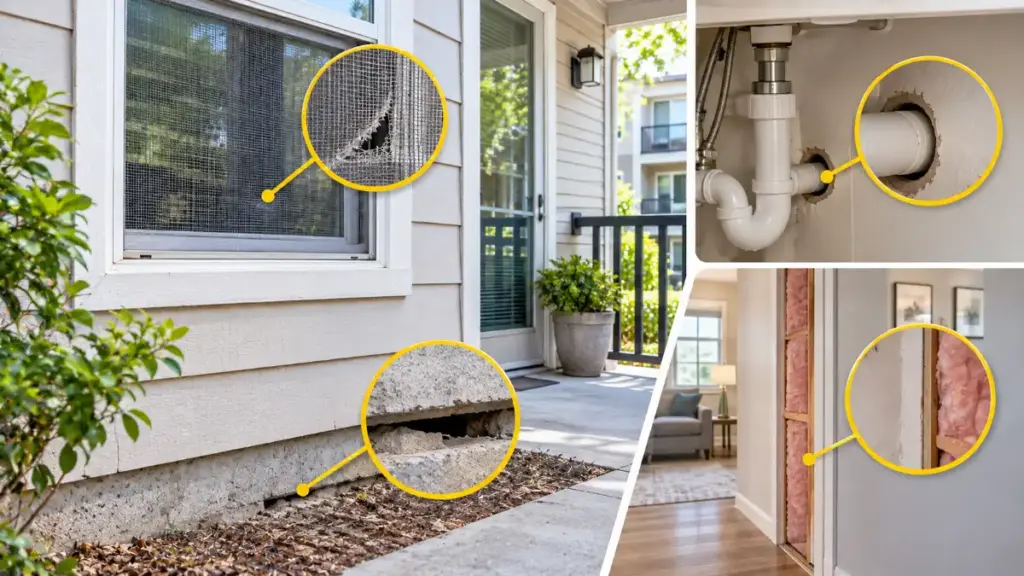
Structural entry points usually strengthen the case that the landlord must arrange pest control. When pests can enter through a defect the tenant cannot reasonably repair, treatment alone will not solve the problem. The owner may need to seal openings, repair screens, correct leaks, or coordinate work across multiple units.
Examples include a broken window screen that allows insects inside, a gap around a pipe that gives rodents access, or a plumbing leak that creates moisture attractive to cockroaches. Shared walls create another complication. In a multi-unit building, treating one apartment without examining connected spaces may allow the infestation to return.
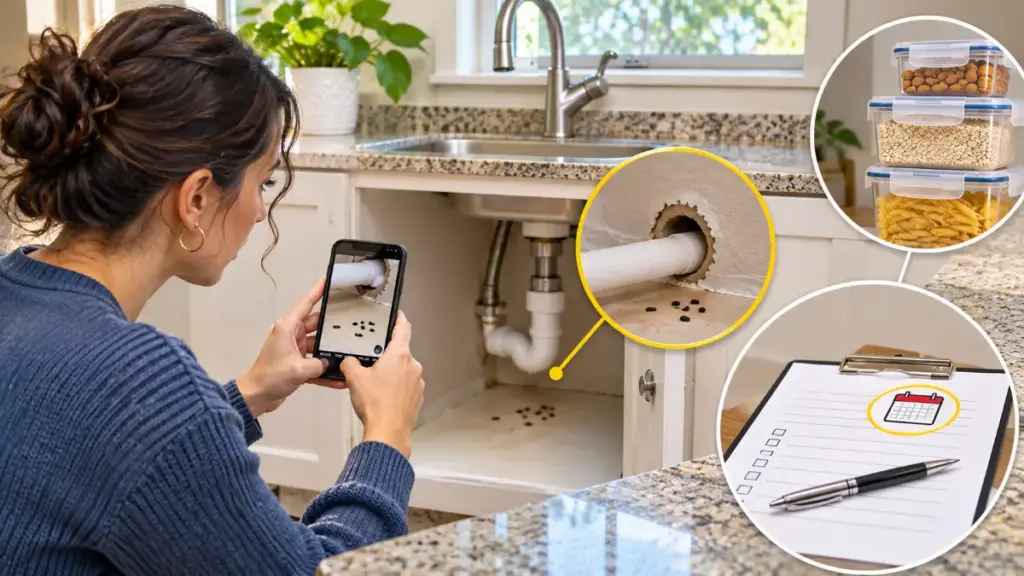
A practical notice should identify both the pest and the suspected building condition. “There are mice” is less useful than “Mouse droppings appeared beneath the kitchen sink, and daylight is visible around the pipe opening.” Specific details help the landlord understand whether an exterminator, maintenance worker, or both need to respond.
Tenants should not make major structural repairs without permission. Instead, they can document the condition and request written confirmation of the repair plan. If the landlord sends a pest professional, the tenant should follow reasonable preparation instructions and keep records of appointments and missed visits.
When can tenants pay or share responsibility?
Tenants may pay for pest control when their actions caused or significantly contributed to the infestation. Responsibility can arise from poor sanitation, improper food storage, failure to report a problem promptly, or bringing infested furniture, luggage, clothing, or other belongings into the rental.
That does not mean every pest sighting proves tenant fault. Pests can travel between apartments, enter through exterior openings, or arrive through building systems. A landlord who claims tenant responsibility should be able to connect the condition to specific facts rather than relying only on the presence of insects or droppings.
Leases sometimes assign tenants responsibility for routine pest control or particular pests. Read the language carefully. A clause may describe reporting duties, preparation requirements, or payment obligations. It may not be enforceable if it conflicts with a state or local habitability rule.
For example, a lease might require a tenant to keep food sealed and report leaks quickly. Those duties are reasonable prevention measures. They are different from making a tenant pay for an infestation caused by a defective wall, an unresolved plumbing leak, or pests spreading through common areas.
What evidence helps determine fault?
Useful evidence includes dated photographs, maintenance requests, inspection reports, pest-control invoices, move-in condition forms, and messages with the landlord. Keep records that show when the problem began, where signs appeared, and whether the condition existed in common areas or nearby apartments.
- Report the issue in writing as soon as you notice it.
- Describe the location, visible signs, and possible entry point.
- Save photographs without disturbing the evidence first.
- Follow reasonable preparation and access instructions.
- Record whether treatment addressed the source or only the visible pests.
These steps help both sides. They also reduce the risk of a dispute becoming a disagreement about memory rather than a question supported by records.
What does NYC require in multi-unit buildings?
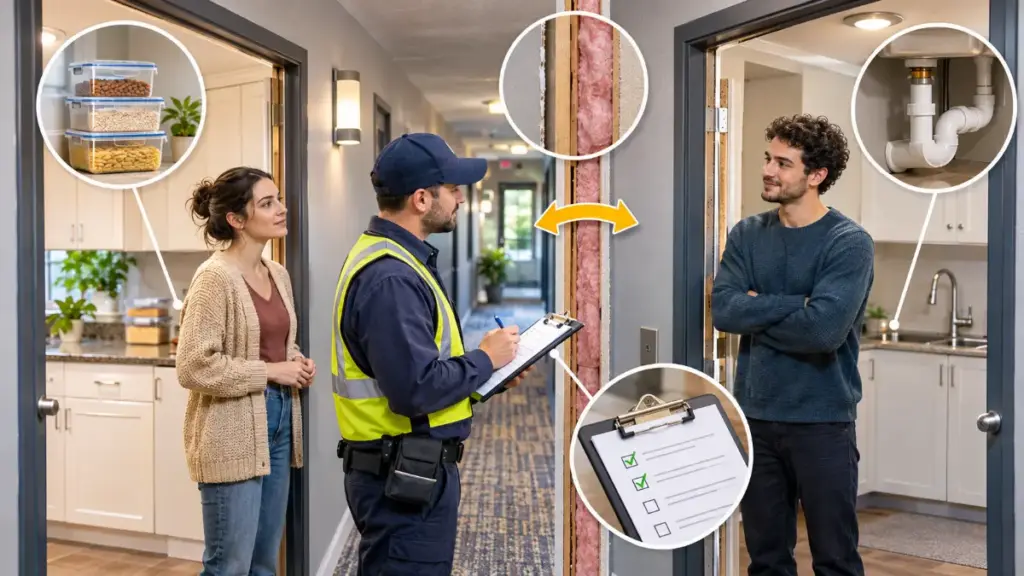
In New York City, owners of buildings with three or more units must keep the property free of pests such as rats, mice, cockroaches, and bed bugs and use licensed exterminators when required. The NYC Housing Maintenance Code and Multiple Dwelling Law establish important duties for covered buildings, while Local Law 55 focuses on correcting underlying pest conditions.
The underlying condition matters in NYC because repeated spraying may not resolve a building-wide problem. Owners may need to repair holes, address leaks, improve sanitation in shared areas, or correct conditions that allow pests to move between apartments. A tenant should report both the infestation and any building defect that may support it.
Coverage can depend on the building’s size, classification, and the specific condition. Tenants in NYC should review guidance from NYC Health and the applicable housing agencies rather than assuming that every rental follows the same procedure. Local enforcement options may also depend on the type of violation and the owner’s response.
For a multi-unit building, the strongest report usually includes the apartment location, the type of pest, the date first observed, signs in shared spaces, and any unsuccessful treatment. Tenants should keep copies of every request and avoid removing notices, traps, or other materials before documenting them.
What should tenants do before calling a professional?
Start with documentation and source control, not improvised chemical treatment. A tenant should identify visible signs, remove accessible food sources, store food in sealed containers, clean spills promptly, and report leaks or openings to the landlord. These steps support integrated pest management while the property owner evaluates the cause.
Do not mix pesticides or apply a product in a way the label does not allow. For any pesticide used in a rental, follow the EPA-registered product label exactly because the label is the law. Keep children and pets away from treated areas, provide ventilation when the label requires it, and use gloves or other protective equipment specified on the label.
Rodent control requires extra care because rodenticides can create secondary-poisoning risks for pets and wildlife. Tenants should not place homemade poisons or unapproved substances in wall voids, food areas, or shared spaces. If treatment is needed, ask who will apply it, what preparation is required, and how access will be coordinated.
A landlord may need to arrange a licensed professional for a large bed bug infestation, a recurring rodent problem, termites, a nest in a high or unsafe location, or pests spreading across several units. The tenant’s job is to report accurately, provide reasonable access, and follow safe preparation instructions.
How much does landlord pest control cost?
There is no reliable national price that applies to every rental. Cost depends on the pest, the size and layout of the property, the treatment method, the number of visits, the severity of the infestation, the local market, and whether structural repairs are also needed.
Responsibility and cost are related but not identical. A landlord may arrange treatment first and later argue that the tenant caused the condition. A tenant should not automatically agree to a charge without asking for the reason, the lease provision being used, and an itemized invoice or written explanation.
When hiring a provider, owners and tenants should look for applicable state licensing, insurance, a written scope of work, clear preparation instructions, and treatment that follows product labels. A written agreement should explain whether follow-up visits, repairs, inspections, or treatment of connected units are included.
| Situation | Likely responsibility | Useful next step |
|---|---|---|
| Pests enter through a foundation gap | Usually the landlord | Report the entry point and request sealing plus treatment |
| Food waste attracts cockroaches | Tenant responsibility may be argued | Correct sanitation, document the condition, and review the lease |
| Bed bugs appear soon after move-in | Depends on evidence and local rules | Report immediately and preserve move-in records |
| Pests spread through shared walls | Often the landlord or building owner | Ask for inspection of connected units and common areas |
Before paying, compare the written explanation with the lease and local housing rules. If the dispute continues, a tenant may need help from a local housing agency, tenant advocate, legal aid organization, or licensed attorney. Read more about whether you can sue a landlord for pest control when treatment duties remain unresolved.
Common mistakes that make disputes harder
The most common mistake is waiting too long to report the problem. Delay can allow pests to spread and may give the landlord an argument that the tenant failed to limit the damage. Prompt written notice protects the tenant’s position and gives the owner a fair chance to investigate.
Another mistake is treating visible pests without addressing the entry point. Spraying around a sink will not fix a leak, and placing traps will not seal a gap beneath a door. The most durable response usually combines identification, sanitation, exclusion, and properly selected treatment.
- Do not assume the person who sees the pest automatically caused the infestation.
- Do not discard photographs, inspection notes, or written notices.
- Do not use a pesticide off-label or transfer it into an unmarked container.
- Do not deny reasonable access for an agreed inspection or treatment.
- Do not rely on a verbal promise when the problem affects habitability.
Tenants should also avoid making broad legal threats before collecting basic facts. A calm notice that identifies the condition, requests a response, and preserves a copy is often more useful than an angry message that does not explain what needs to be fixed.
Frequently asked questions
Can a landlord make a tenant pay for pest control?
A landlord may seek payment when the tenant caused the infestation or when the lease assigns a valid duty. That charge may be disputed if the pests came from structural defects, common areas, neighboring units, or a pre-existing condition.
Does the landlord pay for bed bug treatment?
Bed bug responsibility depends on local law, lease terms, timing, and evidence about the source. Report bed bugs immediately because delays can allow them to spread and can complicate the question of who caused the condition.
What if the lease says the tenant handles pests?
Read the clause alongside state and local housing rules. A lease may assign routine duties, but it cannot always waive basic habitability protections or shift responsibility for structural conditions when local law forbids that arrangement.
Can a tenant refuse pest-control access?
Refusing reasonable access can make the problem worse and may violate the lease. Ask for advance notice, preparation instructions, treatment details, and any safety requirements before providing access.
What should a tenant do if the landlord ignores the report?
Send a dated written follow-up, keep copies, and contact the local housing agency or tenant-support organization if the condition affects habitability. Serious symptoms require medical attention, and possible poisoning concerns should be directed to Poison Control at 1-800-222-1222.
What to do next
Start by identifying the pest, documenting the signs, and reporting the condition in writing. Then separate the likely source from the visible symptom: a structural opening, shared wall, or leak points toward landlord responsibility, while tenant-caused sanitation problems may lead to a different result. Check the lease and local housing rules before accepting or disputing a charge.
Information that can change includes local enforcement procedures, lease language, licensing requirements, and building-specific obligations. Information checked: November 2026. Verify current requirements with the relevant state or local housing authority before making a legal or financial decision.
