
Are landlords responsible for pest control in california? Usually, yes. California landlords generally must keep rental homes habitable under the implied warranty of habitability, including the duties described in California Civil Code Sections 1941 and 1941.1. That responsibility commonly covers harmful infestations involving rodents, roaches, bed bugs and structural pests.
The key question is not only which pest appeared. It is also what caused the infestation, where it started and whether the tenant’s conduct contributed to it. A written report, useful evidence and a clear record of communication can help both sides identify the proper responsibility.
- Landlords generally handle infestations linked to building defects, leaks, structural gaps or common areas.
- Tenants may face responsibility when their conduct substantially causes or attracts pests.
- Bed bug responsibility often depends on whether the landlord can show that the tenant introduced the infestation.
- Tenants should report the problem in writing before considering any legal remedy.
When Are Landlords Responsible?
Landlords are generally responsible when pests make a rental unit unsafe or uninhabitable. California habitability rules address conditions involving rodents, vermin and insect infestations that endanger health. The duty can also include clean common areas, proper trash handling and reasonable action when pests spread through the building.
For example, a recurring roach problem in several units may point to a building-wide sanitation or maintenance issue rather than one tenant’s housekeeping. Likewise, mice entering through an unsealed wall opening usually raise a different responsibility question than mice attracted by exposed food inside one apartment.
The lease does not automatically eliminate the landlord’s habitability duties. A lease may explain how a tenant should report maintenance problems or cooperate with treatment. It generally cannot remove legal protections that require the landlord to maintain a habitable rental property.
Which Infestations Usually Fall to Landlords?
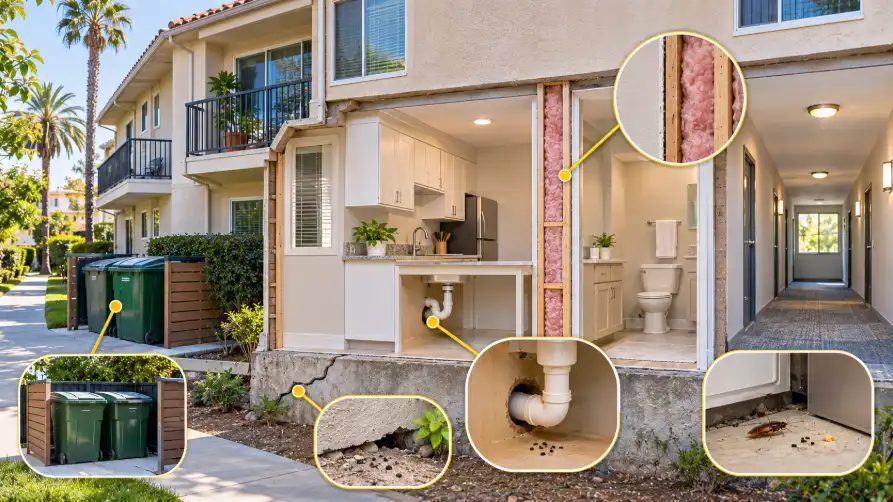
Landlords commonly handle infestations connected to the property itself, shared spaces or conditions outside the tenant’s control. The strongest examples involve structural access points, moisture problems, plumbing leaks and pests moving between units or through common areas.
Structural gaps and moisture
Openings around doors, windows, foundations, pipes or utility lines can give rodents and insects a route indoors. Persistent leaks may also create conditions that support pests. When the property condition causes or sustains the infestation, the landlord generally must investigate and correct the underlying problem.
Common areas and trash
Landlords also have responsibilities for shared hallways, laundry rooms, trash storage areas and other common spaces. Overflowing waste or poor sanitation in a shared area can attract pests that later enter individual units. A tenant should document the location rather than reporting only that “bugs are present.”
Bed bugs
Landlords are generally responsible for bed bug remediation unless they can prove that the tenant introduced the infestation. Bed bugs can move through luggage, furniture, clothing or neighboring units, so identifying the source may require a careful inspection rather than an assumption about cleanliness.
Keep photographs, inspection reports and written treatment instructions. Those records can show when the problem began, where signs appeared and whether other units or common areas were involved.
When Can a Tenant Be Responsible?
A tenant may be responsible when the tenant’s actions or lack of cleanliness substantially contribute to or cause the pest problem. Examples can include uncleaned food, accumulated filth, hoarding conditions or pet fleas. Responsibility depends on the facts rather than on the mere presence of pests.
A landlord should not treat every infestation as tenant-caused without investigating. Conversely, a tenant should not assume that every pest problem is automatically the landlord’s duty. The cause matters. A written inspection can help separate a maintenance failure from a condition created inside the unit.
| Situation | Likely responsibility issue | Useful evidence |
|---|---|---|
| Rodents enter through a wall or foundation gap | Often points toward landlord responsibility | Photos of the opening, droppings and repair requests |
| Pests spread from another unit or shared area | Usually requires property-wide investigation | Dates, locations and reports from affected areas |
| Food waste attracts insects inside one unit | May support tenant responsibility | Inspection findings and sanitation records |
| Fleas are linked to a household pet | Tenant may be responsible for the related treatment | Pet records, inspection findings and treatment notices |
| Bed bugs appear without a proven source | Responsibility may depend on investigation | Inspection report, timeline and neighboring-unit information |
The practical lesson is simple: avoid admitting fault before the facts are clear. Report the condition accurately, cooperate with a reasonable inspection and keep copies of everything exchanged with the landlord or property manager.
What Should Tenants Do First?
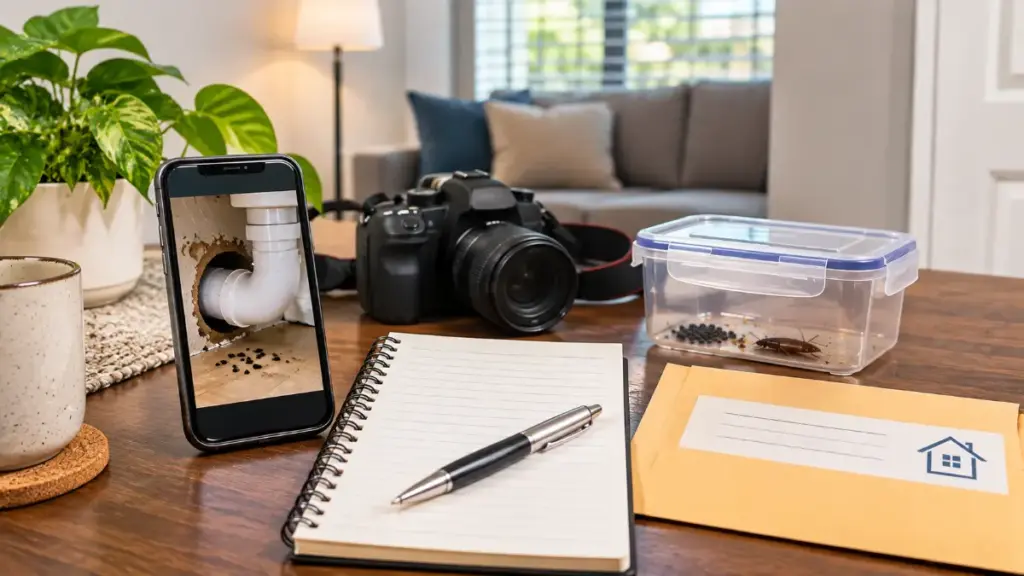
The safest first step is a prompt written notice to the landlord or property management company. Describe the pest, the locations where you found signs and the date you first noticed the problem. Ask for an inspection and a written plan to address both the infestation and its cause.
- Take clear photographs or videos of pests, droppings, entry points, damaged materials and affected areas.
- Send a dated written report through a method that preserves proof of delivery.
- Keep the rental unit accessible for inspection and treatment.
- Follow preparation instructions from the landlord or licensed pest professional.
- Save invoices, notices, inspection reports and every relevant message.
Do not apply a pesticide in a way that conflicts with its label. If treatment is needed, use an EPA-registered product according to the product label. The label is the law. Keep children and pets away from treated areas and follow ventilation and personal protective equipment instructions.
Rodenticide also creates a secondary poisoning risk for pets and wildlife. Avoid homemade mixtures or off-label applications. For serious exposure concerns, contact Poison Control at 1-800-222-1222. Severe symptoms require prompt medical attention.
Why written notice matters
Verbal complaints can be difficult to verify later. A written notice creates a timeline that identifies when the landlord learned about the condition. It also gives the landlord a fair opportunity to inspect, arrange treatment and correct a building defect.
A short message can work if it includes the essential facts. For example: “On Monday, I found fresh droppings beneath the kitchen sink and a gap around the drain pipe. Please arrange an inspection and repair the entry point.” Specific wording is more useful than a general statement that the apartment is dirty or unsafe.
What If the Landlord Does Not Act?
If a landlord fails to address a serious infestation within a reasonable time, a tenant may report possible code violations to a local housing or code enforcement agency. The correct agency can vary by city or county. Keep the original notice and proof that the landlord received it.
California rules may also provide remedies such as “repair and deduct,” subject to statutory limits and notice requirements. This option can carry financial and legal risk if the tenant uses it incorrectly. Before deducting any amount from rent, verify the current requirements and consider qualified legal help.
Tenants may also have protection against retaliation after making a good-faith complaint about habitability conditions. Retaliation claims depend on timing, evidence and the specific conduct involved. Keep notices about rent changes, eviction threats, service reductions or other unusual actions after the complaint.
For a broader explanation of possible claims and evidence, see Can you sue landlord for pest control. The facts of each rental situation matter, so an online explanation cannot replace advice from a California tenant-rights attorney or qualified housing counselor.
How Can Tenants Avoid Future Disputes?
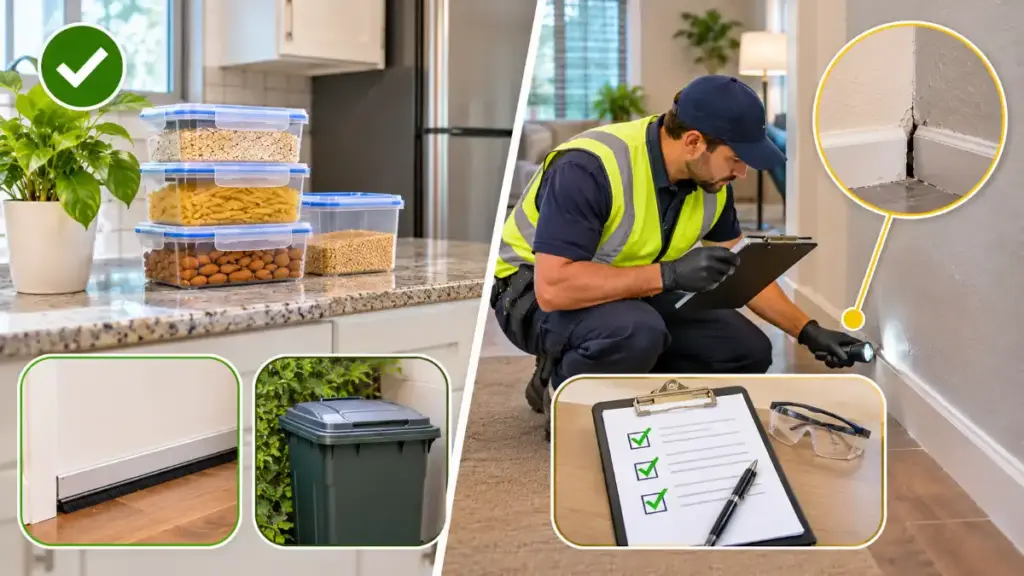
Prevention starts with a clear record of the property’s condition. Report leaks, broken screens, damaged door sweeps, cracks and trash problems before they become an infestation. Early notice gives the landlord a better chance to correct the source while the repair remains straightforward.
Tenants should also store food in sealed containers, remove waste regularly and avoid leaving standing water indoors. These steps do not transfer responsibility for a building defect to the tenant. They simply reduce conditions that can attract pests and make the cause easier to evaluate.
Landlords can reduce disputes by documenting inspections, treatment notices and repairs. Tenants can do the same by keeping a dated file. The most useful record connects four points: the first sign, the reported cause, the landlord’s response and the condition after treatment.
Who should pay for treatment?
Payment usually follows the cause of the infestation. A landlord may pay when the issue results from habitability problems, structural defects, common areas or pests spreading through the building. A tenant may pay when the tenant’s conduct substantially caused the condition.
For a related explanation of payment responsibilities, read Do landlords pay for pest control. Do not assume that a lease clause settles every dispute without considering California habitability law and the facts of the infestation.
When Should a Professional Be Called?
A licensed pest professional is especially important when the infestation is large, recurring or connected to multiple units. Termites, extensive bed bugs, substantial rodent activity, large wasp nests and wildlife problems can involve inspection, exclusion work and safety concerns beyond ordinary household cleaning.
Ask for written details about the proposed treatment, preparation steps, areas that must be vacated and follow-up visits. The provider should explain how the treatment addresses the source. A surface application alone may not solve a problem caused by a leak, open gap or shared wall.
State rules can differ for bees, bats and other wildlife. Contact the relevant California state agency or local extension service before disturbing wildlife or sealing an occupied entry point. In many cases, humane handling and seasonal restrictions affect what work is lawful.
Frequently Asked Questions
Are landlords responsible for pest control in california if the lease says tenants pay?
A lease provision does not automatically remove the landlord’s habitability duties. Responsibility still depends on the infestation’s cause, the property condition and whether tenant conduct substantially contributed to the problem.
Does a landlord have to pay for bed bug treatment?
Landlords are generally responsible for bed bug remediation unless they can prove the tenant introduced the infestation. Inspection records and evidence from nearby units can help clarify the source.
Can a tenant be charged for roach treatment?
That may happen when the tenant’s conduct substantially caused or attracted the roaches. A building-wide problem, plumbing issue or infestation from another unit can point toward landlord responsibility instead.
What should a tenant do before calling code enforcement?
Send a prompt written notice, document the infestation and allow reasonable access for inspection or treatment. If the landlord does not act within a reasonable time, contact the appropriate local housing or code enforcement agency.
Can tenants deduct pest control costs from rent?
California rules may allow “repair and deduct” in some circumstances, but statutory limits and notice requirements apply. Verify the current rules before withholding rent or deducting any expense.
What if the landlord retaliates after a pest complaint?
California provides protections against retaliation in qualifying situations. Preserve notices, messages and dates, then seek advice from a qualified tenant-rights organization or attorney about the available remedy.
Keeping the Responsibility Clear
Are landlords responsible for pest control in california? In most habitability-related situations, yes. Landlords generally must address harmful infestations tied to structural defects, leaks, common areas or pests spreading through the property. Tenants may be responsible when their conduct substantially creates or attracts the problem.
Start with written notice, careful documentation and reasonable cooperation. Before using repair-and-deduct or another remedy, verify the current California requirements and obtain qualified advice for the specific facts.
Information check: Habitability duties, notice rules, code-enforcement procedures and available remedies can change or depend on local facts. Verify current requirements through official California sources and the relevant local agency before taking legal or financial action.
