
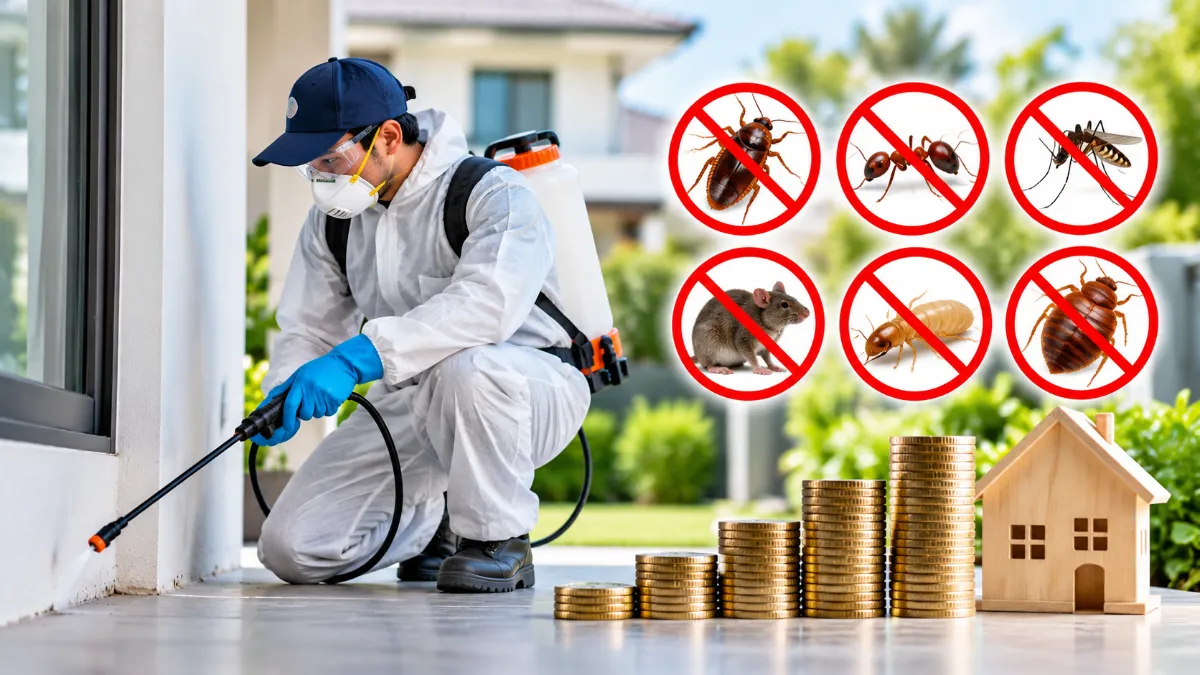
Pest control cost becomes easier to estimate when you first identify the pest, the size of the problem and the treatment schedule you need. Generally, a basic one-time visit may cost about $100 to $600. However, complex termite or bed bug cases can reach $3,500 or more. In rare whole-home situations, total costs may exceed $5,000.
For example, imagine finding ants near the kitchen, scratching sounds in the attic or mud tubes beside a wooden wall. In that situation, the right response is not to choose the cheapest advertised price immediately. Instead, a useful estimate must account for inspection time, follow-up visits, sealing work, treatment method and the level of protection included.
Key Update:
- Generally, household pest service commonly costs $100–$300 for an initial inspection and treatment.
- Meanwhile, recurring visits usually range from $40–$150 per service.
- However, bed bug and termite work can cost far more than routine ant or spider treatment.
- As a result, annual plans may offer stronger per-visit value when ongoing protection is needed.
What Does Pest Control Cost in 2026?
In 2026, pest control cost typically ranges from $150 for a basic one-time treatment to $5,000 or more for complex infestations. Ultimately, the final price depends on pest type, infestation severity, property size, location and the treatment method required.
For general household pests, an initial inspection and treatment often falls between $100 and $300. Likewise, recurring plans commonly range from $40 to $150 per visit. However, these are planning ranges rather than guaranteed quotes because two homes with the same pest may need very different work.
| Service type | Typical price range | Common use |
|---|---|---|
| One-time treatment | $100–$600 | Isolated or minor problems |
| Monthly service | $40–$125 per visit | Ongoing maintenance |
| Quarterly service | $100–$300 per visit | Seasonal prevention |
| Annual contract | $300–$900 per year | Year-round protection |
Within its wider range, a one-time treatment averages about $150–$375. Similarly, quarterly service averages roughly $140–$200 per visit. Annual contracts average approximately $450–$800, which can reduce the effective cost per visit when regular coverage is genuinely useful.
How Frequency Changes the Price
Service frequency changes pest control cost because recurring programs spread inspections and preventive work across multiple visits. For instance, monthly service may suit active or recurring problems. In contrast, quarterly visits are often practical for seasonal prevention. An annual contract can provide the best per-visit value when the plan includes meaningful monitoring and support.
One-Time Treatment
A one-time treatment generally costs $100–$600, with many minor or isolated issues falling near $150–$375. Therefore, this option fits a contained ant, spider or occasional wasp problem. However, it usually does not include ongoing monitoring, so new activity may require another paid visit.
Monthly Service
Monthly pest control usually costs $40–$125 per visit. As a result, frequent service can help homes with recurring ants, roaches, spiders or seasonal activity. Still, the lower visit price is not the only consideration. Check whether inspections, return visits and covered pests are included in the agreement.
Quarterly Service
Quarterly service commonly costs $100–$300 per visit, with an average near $140–$200. This schedule can work well for seasonal prevention. However, it may be less suitable when a home already has an active infestation that needs closer monitoring or several treatment stages.
Annual Contract
Annual plans typically range from $300–$900 per year. On average, pricing often falls between $450 and $800. The plan may deliver better long-term value when it includes scheduled inspections, preventive treatment and additional visits if covered pests return between appointments.
One practical comparison is the cost per visit. For example, a $600 annual plan with four scheduled visits equals $150 per visit before considering any included return service. Therefore, that may be stronger value than paying $250 for isolated visits several times a year.
How Much Does Each Pest Cost?
Pest type is one of the strongest drivers of pest control cost. Generally, ants and spiders often need standard treatment. By comparison, rodents may require exclusion work. Bed bugs and termites can involve specialized equipment, multiple rooms or structural protection, which raises the total.
| Pest or service | Typical price range | What can raise the price |
|---|---|---|
| Ants | $120–$441 or $40–$100 monthly | Colony location and species |
| Spiders | $120–$441 | Recurring activity and prevention needs |
| Roaches | $120–$441 | Species, severity and multiple visits |
| Fleas | $169–$459 | Infestation size and repeat treatments |
| Mosquitoes | $90–$295 per service | Yard size and service frequency |
| Rodents | $249–$750 or more | Entry sealing and infestation severity |
| Bed bugs | $250–$3,500 or more | Rooms affected and treatment method |
| Termite baiting | $1,000–$2,300 | Colony activity and property scope |
| Liquid termite protection | $1,700–$2,700 | Perimeter size and treatment requirements |
Termite Treatment
Termite treatment may cost $250 for a limited spot treatment or $5,000 or more for a whole-home solution. In many cases, baiting systems commonly range from $1,000–$2,300. Meanwhile, liquid perimeter protection often costs $1,700–$2,700.
Termite species, active colony count, infestation extent, property size and treatment type all affect the quote. For example, a home with visible activity in one location may need a different plan from a property requiring broad perimeter protection.
Bed Bug Treatment
Bed bug treatment often starts near $500 for one room and may reach $3,500 or more for a severe multi-room infestation. Specifically, single-room treatment can range from $500–$1,500. Multiple-room work may cost $1,500–$3,500 or more.
Heat treatment and chemical treatment can require different preparation, equipment and labor. In addition, the number of affected rooms matters greatly. Early professional assessment may limit the area that requires treatment, although no price outcome should be assumed before inspection.
Rodent Control
Rodent control programs commonly start around $250 and may exceed $1,000 when extensive exclusion work is needed. Initially, treatment often costs $250–$500 or more. Monitoring may add $50–$150 per month or per service.
Trapping alone may not solve the problem if rodents can re-enter. Instead, exclusion work focuses on sealing entry points. Furthermore, attic access, sanitation recommendations and the number of openings can all change the final estimate.
Ants, Spiders and Roaches
Ant treatment may cost $150–$350 or more for a one-time visit. Ongoing plans commonly range from $40–$100 per month. Similarly, spider treatment often costs $150–$400 or more. Roach treatment may range from $150–$500 for one visit or $300–$1,500 for multi-visit programs.
Carpenter ants can need more targeted work than some other ant species. Also, roach infestations may require follow-up service because treatment must address existing activity and help reduce future activity. Therefore, a low initial price may not represent the complete treatment plan.
Mosquitoes, Wasps and Fleas
Mosquito treatment commonly costs $75–$200 for a one-time visit. In contrast, seasonal programs may range from $300–$1,000 or more. Wasps and other stinging insects may cost $100–$300 for nest removal. Flea treatment often costs $150–$500 for one visit or $300–$1,500 for multiple treatments.
Yard size affects mosquito pricing. Likewise, flea work may require more than treating indoor surfaces because the treatment plan can depend on the extent of activity and whether repeat service is needed.
Why Do Pest Control Prices Vary?
Pest control cost reflects the labor, materials, inspection scope and treatment risk involved in solving a specific problem. Naturally, a larger home needs broader coverage. Moreover, a severe infestation may need specialized equipment, preparation instructions and repeated visits rather than one standard application.
- Home size: More square footage usually requires more product, labor time and inspection coverage.
- Infestation severity: Multi-room or widespread activity can require follow-up visits and additional monitoring.
- Location: Climate and local pest prevalence influence demand and treatment requirements. For example, termites may be a larger concern in high-moisture areas.
- Treatment method: Heat treatment, baiting systems and rodent exclusion can cost more than routine preventive service.
- Number of treatments: Some issues respond to one visit. However, others need monthly, twice-monthly or quarterly support.
Location deserves special attention. For instance, a mosquito-heavy region may make seasonal yard service more useful. Similarly, a humid area may create conditions that increase termite concern. For location-specific pricing, a nearby professional inspection is more useful than applying a national average to every home.
One-Time or Ongoing Service?
A one-time treatment is usually suitable for a specific, contained problem. By contrast, an ongoing plan is designed for regular inspections, preventive treatment and continued support. Ultimately, the better choice depends on whether the problem is occasional or likely to return because of seasonal pressure or property conditions.
| One-time treatment | Ongoing plan |
|---|---|
| Addresses a current pest issue | Provides scheduled preventive protection |
| Usually involves one service visit | Includes regular inspections and treatments |
| Does not normally include ongoing monitoring | May include additional visits for covered pests |
| Fits isolated or occasional concerns | Fits recurring activity and year-round protection |
| Future activity may require a new payment | Can help identify problems before they grow |
The less obvious comparison is support between scheduled visits. Some companies visit quarterly. Other plans may provide additional service when covered pests return. Therefore, compare the number of visits, included pests, cancellation terms and follow-up policy rather than comparing only the first invoice.
Is Professional Pest Control Worth It?
Professional pest control can be worthwhile when pests threaten property, disrupt daily life or keep returning despite basic measures. In addition, a trained professional can identify contributing conditions, choose a targeted approach and recommend monitoring instead of treating symptoms repeatedly.
For example, rodents may continue entering through an unsealed opening. Likewise, termites may require protection beyond a visible spot. Bed bugs may spread between rooms. In such cases, the value comes from diagnosis and prevention as well as the treatment itself.
How Much Does Orkin Cost?
Orkin pricing typically starts at approximately $250 for a basic one-time treatment and can reach several hundred dollars for more complex problems such as termites or bed bugs. However, exact pricing depends on the home, pest, treatment scope and service frequency.
Orkin may develop a customized plan after evaluating pest activity and conditions around the property. In particular, semi-monthly or recurring service can provide stronger long-term value when it reduces repeat problems and includes continued support. A professional inspection remains the most accurate way to determine the expected cost.
When reviewing an Orkin quote or another provider’s proposal, check the treatment area, covered pest categories, follow-up terms and whether exclusion or structural work costs extra. Ultimately, the name of the provider does not replace the need to understand the written scope.
What Signs Mean You Need Service?
Early signs can help homeowners address pest activity before the problem spreads. For example, droppings, wall sounds, damaged packaging, mud tubes, unusual odors, nests and webs can all justify a closer inspection. The sign alone does not determine the price, but it helps identify the likely service category.
- Droppings or smudges: These may appear near food storage, baseboards or hidden travel paths.
- Scratching in walls or attics: Nighttime scurrying or squeaking can indicate rodents.
- Damaged packaging or wiring: Chewed materials may point to active rodent access.
- Sawdust or mud tubes: These signs near wood may warrant a termite inspection.
- Unusual odors: Musty or foul smells can indicate hidden pest activity.
- Nests or webs: Shredded material and concentrated webs may show that pests have settled nearby.
Avoid waiting when signs appear in several rooms or near structural components. In some cases, a contained issue may remain within a lower service range. However, delayed action can increase the area, labor and treatment stages involved, although only an inspection can establish the actual scope.
How to Compare a Pest Control Quote
The strongest quote is not always the lowest quote. Instead, compare what the provider will inspect, treat, monitor and cover. A useful proposal should make the service boundary clear enough that you can understand why the price fits the problem.
- First, confirm the pest species or suspected category.
- Next, ask whether the quote includes inspection and follow-up visits.
- Then, check if entry sealing, bait stations or specialized equipment cost extra.
- Also, compare the total annual cost with the cost per visit.
- Additionally, review which pests are covered by a recurring plan.
- Afterward, ask how quickly covered pests receive a return visit.
- Finally, verify preparation instructions and any service limitations.
For general consumer guidance on safer pesticide use and household pest management, review information from the U.S. Environmental Protection Agency. In addition, product selection and application should follow label directions. A professional can also explain which treatment method fits the property and pest involved.
Common Pest Control Pricing Mistakes
Many pricing surprises come from comparing incomplete offers. For example, a quote for one application may not include sealing, preparation, monitoring or return service. Another common mistake is treating a recurring problem as though it were a single isolated event.
- Choosing by starting price: The cheapest first visit may not cover the work needed to solve the cause.
- Ignoring the service schedule: Monthly, quarterly and annual plans produce different total costs.
- Skipping the inspection: Pest type and entry conditions can change the treatment category.
- Overlooking follow-up terms: Ask whether returning covered pests trigger an included visit.
- Assuming every pest needs the same method: Termites, bed bugs, rodents and mosquitoes require different approaches.
An experienced way to evaluate the quote is to separate immediate control from future prevention. A one-time visit may solve today’s visible activity. However, sealing, monitoring and scheduled service may reduce the chance of paying for the same problem again.
Frequently Asked Questions
What is the average pest control cost?
Generally, household pest control costs $100–$300 for an initial inspection and treatment. A basic one-time service may be near $150, while complex infestations can cost far more.
How much does recurring pest control cost?
Typically, recurring service costs $40–$150 per visit. Monthly plans may range from $40–$125. Meanwhile, quarterly service commonly costs $100–$300 per visit.
Is a one-time treatment cheaper than an annual plan?
Usually, a single visit costs less upfront. However, an annual plan may provide better value when recurring pests require multiple visits, monitoring and preventive treatment throughout the year.
How much does termite treatment cost?
Termite treatment can range from $250 for spot work to $5,000 or more for a whole-home solution. Baiting often costs $1,000–$2,300 while liquid protection may cost $1,700–$2,700.
How much does bed bug treatment cost?
Bed bug treatment often costs $500–$1,500 for one room. However, multiple-room or severe infestations may reach $3,500 or more, depending on treatment method and affected area.
Does home size affect pest control pricing?
Yes. Generally, larger properties require more inspection time, treatment product and labor. The number of rooms, yard size and accessible treatment areas can also influence the estimate.
How much does rodent control cost?
Rodent control commonly starts around $250. However, extensive exclusion work may exceed $1,000. Monitoring can add about $50–$150 per month or per service.
How can I get an accurate pest control quote?
The most reliable step is to schedule a professional inspection. The provider can identify pest activity, assess contributing conditions and recommend a treatment plan tailored to the property.
Making the Cost Decision
Pest control cost is best judged by the problem solved rather than the first number shown in an advertisement. Generally, routine ants or spiders may fit a modest one-time or recurring range. In contrast, rodents, termites and bed bugs can require broader work with higher labor and equipment costs.
Before choosing a provider, compare the treatment method, visit schedule, follow-up policy and total annual value. If signs are spreading or involve structural areas, arrange an inspection promptly. For an Orkin quote or another local estimate, request a clear written scope before approving service.
